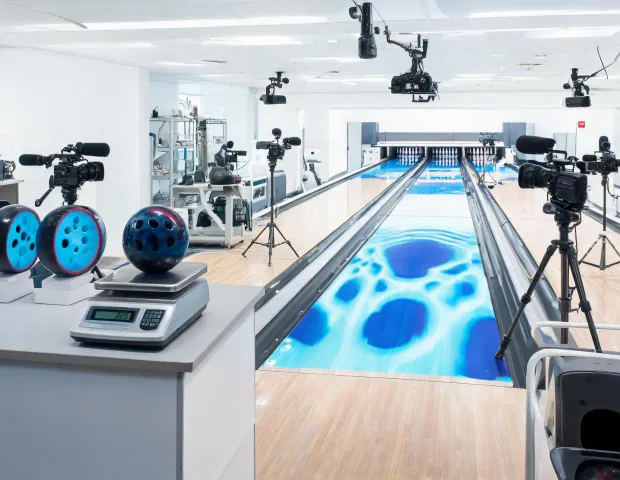
Motion verification

Hammer Bowling Innovation Lab

A repeatable screening method for coverstock, differential RG, surface and layout decisions under stated lane and release conditions.

Bowling motion verification bench

Six-step comparison protocol

  1. Stabilize the lane: record surface, pattern length, oil volume, zone ratio and games since conditioning.
  2. Stabilize the ball: document model, weight, layout, current surface preparation and cleaning.
  3. Capture release: measure speed at release, rev rate, axis rotation, axis tilt and PAP.
  4. Deliver the set: roll at least six shots to the same target window; flag shots outside the window.
  5. Observe motion: record skid length, breakpoint location, response speed, pocket entry and continuation.
  6. Change one input: compare surface or model only after preserving the other conditions.

Technical trade-offs that resist one-number rankings

Reactive resin versus urethane-like response

Reactive coverstock can create more friction response and recovery on suitable oil volumes. A smoother urethane-like response can control the breakpoint, but may read too early or carry oil downlane. Neither route is universally stronger.

Higher differential versus shape control

More differential can increase flare potential and expose fresh cover. It can also increase shape separation from a low-flare control piece. Layout, drilling and the bowler's release constrain the observed result.

Fresh abrasion versus surface stability

Lower-grit preparation may increase early traction, while lane shine changes the effective surface during use. Track the number of games because the box state is not permanent.

Laboratory repeatability versus center reality

Oil transfer, pair-to-pair differences, temperature and shot execution add variance. Screening reduces uncertainty; it does not guarantee the same motion in every center.

Minimum evidence record

InputRecordDecision use
Ball12–16 lb, RG, differential, layout, finishConfiguration identity
ReleaseSpeed, rev rate, rotation, tilt, PAPMatch motion to player
LaneSurface, length, volume, transition stageBound the comparison
ObservationSix-shot set plus flagged missesCompare shape direction

Limitation: published specifications and a six-shot screen are selection evidence, not a warranty of score, carry percentage or reaction across changing lane conditions.

Run the protocol with your own baseline